





Connect with journalists.
Sponsored
AI Engineer | Author
Publications:
I’m Emmimal Alexander, an AI Engineer and author, and the founder of EmiTechlogic, a platform focused on practical, research-backed insights in artificial intelligence and machine learning. My work centers on turning AI from theory into systems that operate reliably in real-world environments. My background spans neural networks, deep learning, generative AI, and agentic AI, with experience building models, analyzing failures, and explaining how these systems behave in production. I’ve authored books on deep learning with Python and agentic AI for executives, bridging technical foundations with strategic and operational decision-making. Through EmiTechlogic and my writing, I regularly cover AI trends, autonomous agents, enterprise AI adoption, governance, and execution, and I’m available to support journalists with clear, well-grounded commentary.
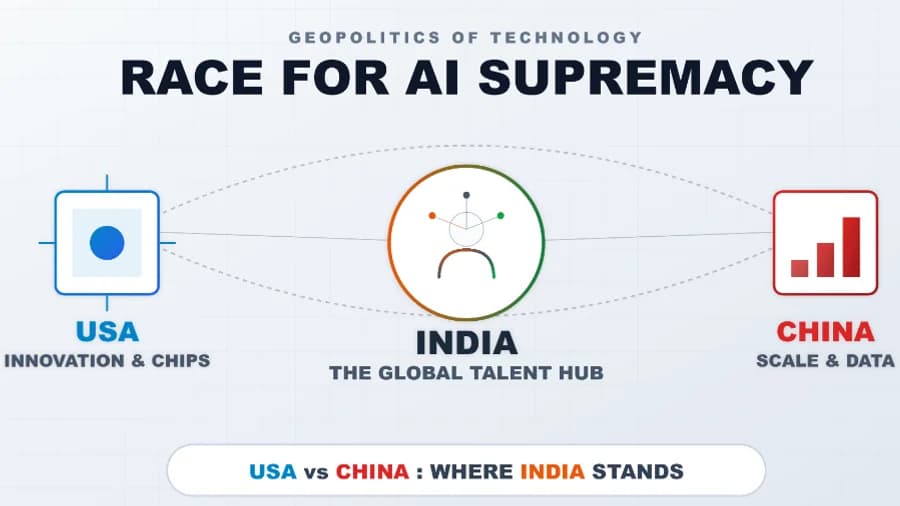
As an AI expert based in India with a focus on global tech trends, I analyzed the intensifying US-China AI race in my article China vs. USA: The Race for AI Supremacy and Where India Stands (published Nov 2025): https://emitechlogic.com/china-vs-usa-the-race-for-ai-supremacy-and-where-india-stands/. The piece examines America's private-sector innovation (e.g., OpenAI, NVIDIA) versus China's state-driven scale (e.g., AIDP investments, surveillance tech), while spotlighting India's strengths as a talent hub (IITs, IndiaAI Mission) and potential neutral player in ethical AI development and outsourcing. I offer balanced, forward-looking insights on geopolitical implications, job impacts, and pathways for collaboration—ideal for stories on AI power dynamics, emerging markets, or global ethics
emitechlogic.com
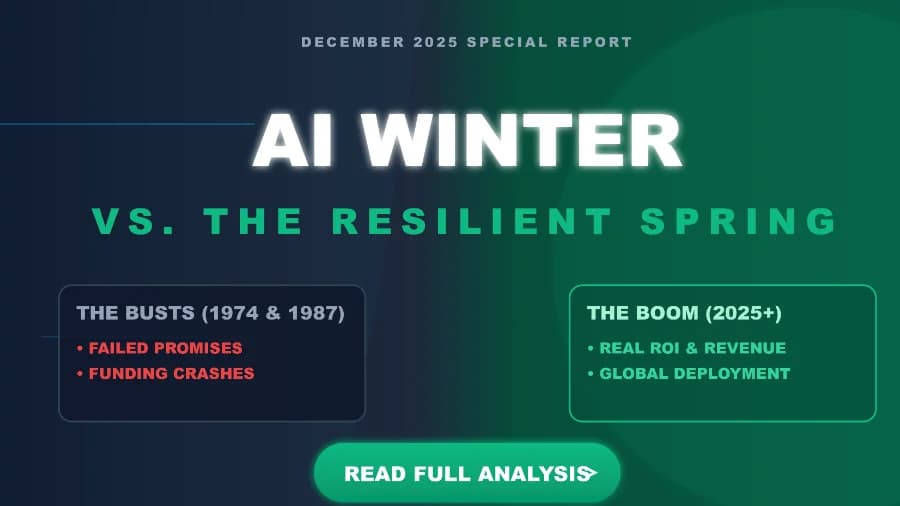
In this Article I explored the historical 'AI Winters' and their modern lessons in my in-depth article AI Winter Explained: How Funding Cuts, Failed Promises, and Market Shifts Shaped the Future of Artificial Intelligence (Dec 2025): https://emitechlogic.com/ai-winter-explained-how-funding-cuts-failed-promises-and-market-shifts-shaped-the-future-of-artificial-intelligence/. Covering the 1974–1980 (e.g., ALPAC Report ending $20M in translation funding) and 1987–1993 (e.g., Lisp Machine collapse, expert systems failures) busts, it details causes like overpromising, scalability issues, and funding crashes. I contrast this with today's more resilient AI—driven by real revenue and.production-scale deployment—while highlighting risks of market corrections from high costs and hype. Practical sections offer advice for sustainable AI careers (e.g., master fundamentals, diversify skills) and businesses (e.g., prioritize ROI, avoid dependencies). Ideal for commentary on AI project failures, hype cycles, investment risks, or whether another 'Winter' looms.
emitechlogic.com
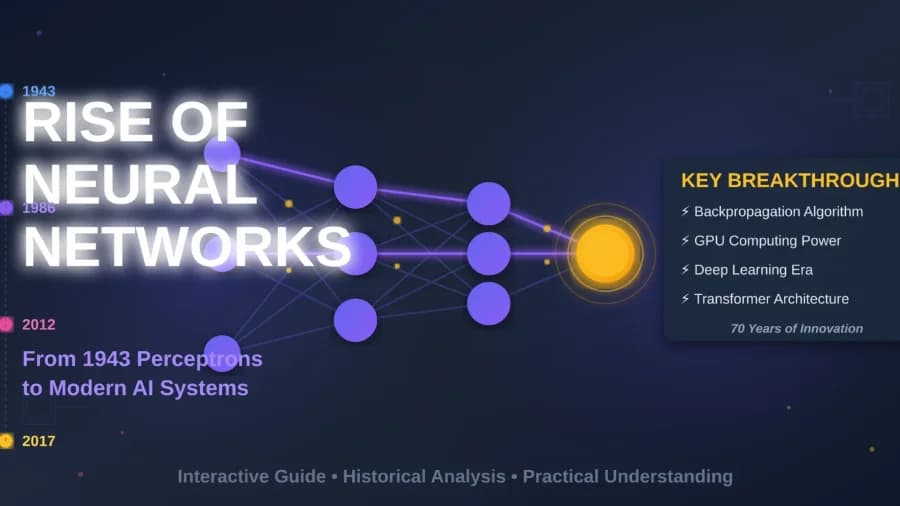
As an AI engineer specializing in deep learning history and applications, I detailed the 70-year rise of neural networks in my comprehensive article Rise of Neural Networks: Historical Evolution, Practical Understanding and Future Impact (Dec 2025): https://emitechlogic.com/rise-of-neural-networks-historical-evolution-practical-understanding-and-future-impact-on-modern-ai-systems/. Tracing milestones from McCulloch-Pitts (1943) and Perceptron hype/collapse (1957–1969) to backpropagation (1986), AlexNet's GPU-fueled breakthrough (2012), and Transformers (2017), it explains core mechanics (e.g., attention, LSTMs) with interactive demos and tables. I highlight lessons from failures—driving rigor over hype—while exploring modern impacts: foundation models, multimodal systems, agentic AI, and emergent capabilities from scale. Balanced insights on why neural nets dominate (vs. symbolic AI) and future challenges (e.g., data bottlenecks). Perfect for commentary on AI evolution, deep learning fundamentals, hype cycles, or the road to agentic systems.
emitechlogic.com
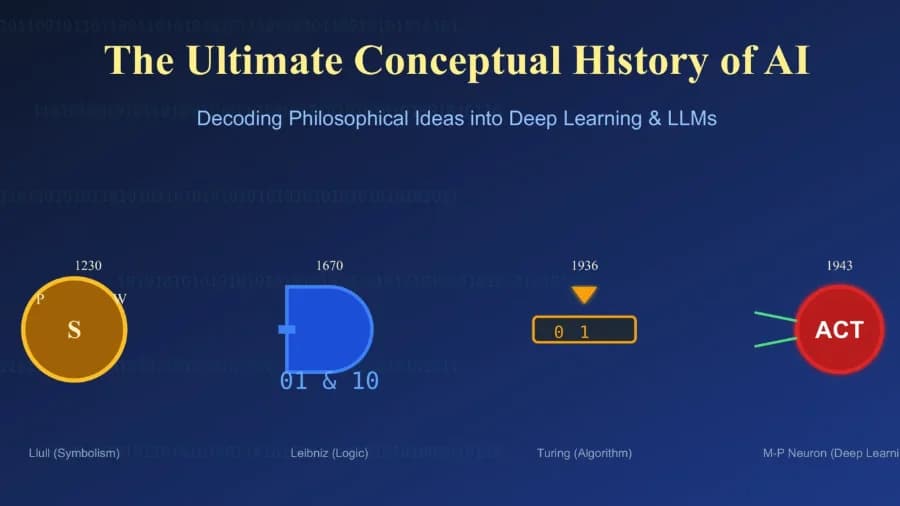
As an AI engineer with hands-on deployment experience, I traced 750 years of AI engineering history—focusing on why systems fail predictably—in my article The Engineering History of AI: Why Modern Systems Fail in Predictable Ways (Dec 2025): https://emitechlogic.com/the-engineering-history-of-ai/. From Ramon Llull's 13th-century combinatorial machine and Turing's Universal Machine to symbolic AI winters, backpropagation, Transformers, and modern LLMs, it highlights recurring constraints (e.g., combinatorial explosion causing hallucinations, tokenization breaking math, context truncation). Practical sections explain production pitfalls—like inference costs and stochastic outputs—and solutions: grounding with RAG/tools, hybrid neurosymbolic integration, and deterministic verification. Balanced insights on building reliable AI, drawing from real deployments. Ideal for commentary on LLM failures, engineering reliability, neurosymbolic trends, or historical lessons for today's hype.
emitechlogic.com
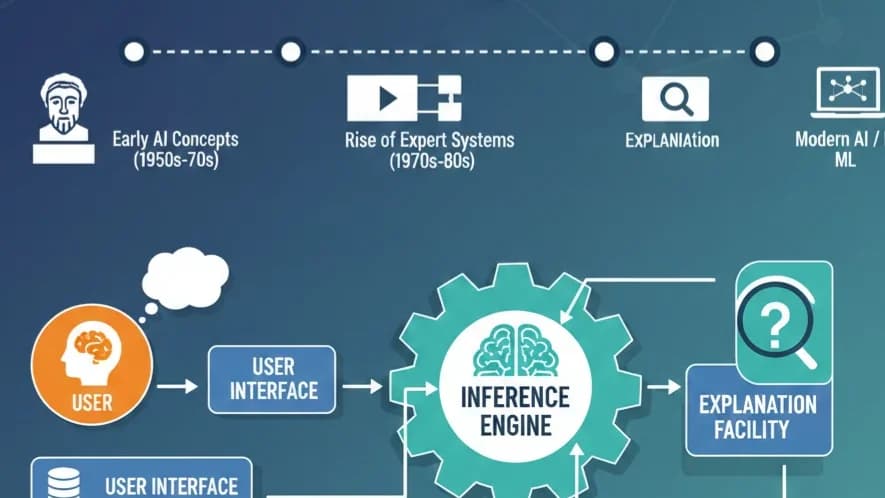
As an AI engineer bridging classical and modern systems, I authored a complete guide to expert systems—the rule-based AI pioneers of the 1970s–1980s—in Expert Systems: A Complete Guide (Dec 2025): https://emitechlogic.com/expert-systems-a-complete-guide/. Covering core components (knowledge base, inference engines with forward/backward chaining), iconic examples (MYCIN's diagnostics, XCON's millions in savings), and hands-on Python code for building your own (e.g., laptop troubleshooting system), it explains their decline (knowledge bottlenecks, maintenance) while highlighting lessons for today: superior explainability vs. black-box LLMs, and the rise of hybrids/neurosymbolic AI. Practical insights on when rules outperform ML (e.g., compliance, transparency). Ideal for commentary on trustworthy AI, explainable systems, neurosymbolic trends, or historical roots of modern challenges.
emitechlogic.com
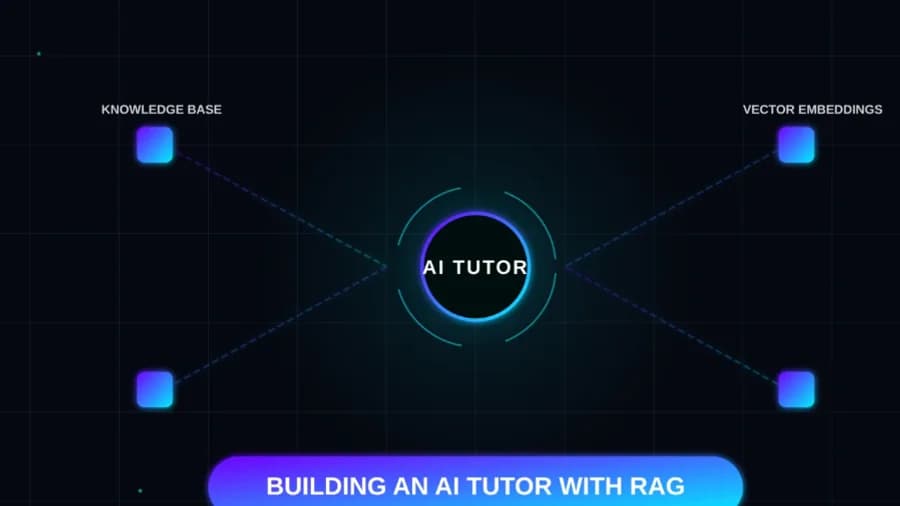
I created a complete hands-on guide to developing an AI-powered tutor using Retrieval-Augmented Generation and vector databases in Building an AI-Powered Tutor with RAG and Vector Databases (Dec 2025): https://emitechlogic.com/building-an-ai-powered-tutor-with-rag-and-vector-databases/. Using LangChain, Pinecone, Groq API (Llama/Mixtral), HuggingFace embeddings, and Streamlit, it walks through data ingestion from PDFs, chunking, semantic retrieval, grounded prompting, and a live chat UI—with full code, GitHub repo (github.com/Emmimal/ai-powered-tutor-rag-vector-db), interactive RAG simulator, and evaluation metrics (Ragas/TruLens). Practical tips on reducing hallucinations, optimizing latency (caching/HNSW), and ethical deployment for personalized education. Ideal for insights on AI tutors, reliable RAG applications, EdTech innovation, or overcoming LLM limitations in learning tools.
emitechlogic.com

Authored by: Emmimal P Alexander
This book explains neural networks and deep learning from fundamentals to advanced architectures, including perceptrons, CNNs, RNNs, GANs, and reinforcement learning. Designed for students, engineers, and research scholars, it bridges theory and practice through clear mathematics, annotated Python code, and intuitive diagrams, helping readers understand how models work internally and how to build, analyze, and optimize them using TensorFlow, PyTorch, and Keras.

Authored by: Emmimal P Alexander
Rather than focusing on abstract theory, this book explains how agentic AI operates inside organizations—how goals are set, tools chosen, boundaries enforced, and decisions executed. Written by Emmimal P. Alexander, AI engineer and author of Neural Networks and Deep Learning with Python, it provides practical frameworks, strategy tools, and governance models for executives to pilot, scale, and manage autonomous agents responsibly—without hype, and with real business impact.