Automotive IndustryPress release
Precision Ceramic disc Engineering: Evaluating a Wholesale NTC & Ceramic Capacitor disc Exporter for OEM Assembly
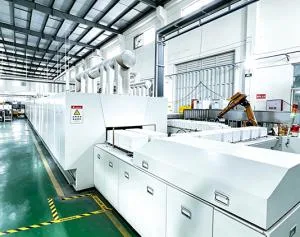
ZHANGZHOU, FUJIAN, CHINA, November 7, 2026 /EINPresswire.com/ -- Engineering teams and procurement specialists in modern power electronics face continuous challenges regarding modern component sourcing. As electronic assemblies grow denser and thermal margins shrink, passive components like negative temperature coefficient (NTC) thermistors and ceramic capacitors exert an outsized influence on overall circuit reliability. A failure in an inexpensive disk-shaped component can trigger field recalls, compromise system stability, or cause production lines to stall. Consequently, evaluating a trustworthy Wholesale NTC & Ceramic Capacitor disc Exporter requires a comprehensive audit that moves beyond standard catalog data sheets and focuses heavily on manufacturing consistency, metallurgical integrity, and supply chain transparency.
Dimensional Tolerances and Electrical Parameter Consistency
Precision mounting on high-speed automated assembly lines demands extremely strict physical tolerances. When disk thermistors or ceramic capacitors exhibit variations in thickness, diameter, or outer encapsulation contours, mechanical feeders encounter frequent jams and automated optical inspection systems generate unnecessary defect flags. A variance of a few micrometers can disrupt automated pick-and-place nozzles, causing component misalignments before reflow. Leading manufacturing facilities mitigate these risks by enforcing tight geometric controls on ceramic substrates, ensuring seamless integration into automated production runs.
Equally critical is the uniformity of electrical parameters across bulk shipments. For Power NTC Thermistor Chips, resistance values at ambient temperatures and B-constant characteristics dictate thermal compensation accuracy and inrush current suppression performance. In ceramic disc capacitors, capacitance drift, dielectric loss tangents, and insulation resistance must remain strictly within targeted bands across production batches. Thermal runaway or erratic switching behavior often traces back to subtle batch-to-batch variations. By utilizing automated testing equipment to screen one hundred percent of production output for core electrical metrics, advanced manufacturers help OEMs maintain predictable system performance across diverse operating environments.
Metallization Integrity: Electrode Adhesion and Solderability Performance
The physical interface where ceramic substrates connect to metallic terminals represents one of the most common failure points in electronic assemblies. During wave soldering, silver brazing, or high-temperature reflow, thermal stress can cause delamination between the ceramic body and its metallic coating. Microscopic fissures at this interface increase contact resistance, degrade thermal dissipation, and allow humidity penetration. High-quality disc manufacturing relies on controlled silver pasting and specialized sintering protocols to establish deep interfacial bonding between the metal electrode layer and the underlying ceramic matrix.
Solderability performance also governs mass manufacturing yields. Poor electrode wetting produces cold solder joints, void formation, and brittle connections susceptible to mechanical shock or continuous vibration. Disc components undergo continuous solderability evaluations, preserving terminal surface cleanliness and preventing oxidation during transit and storage. This attention to surface chemistry ensures rapid wetting and durable solder fillets, extending product lifespans in demanding automotive, industrial, and consumer applications.
Quality Assurance at Scale: Incoming Inspection and Mass Production Rigor
Sustaining high component quality across small sample runs is relatively straightforward, but preserving that precision across billions of units requires immense operational infrastructure. A manufacturer operating with an annual output capacity of eight billion chips demonstrates the structural maturity required to support large-scale OEM demands. High-volume manufacturing brings operational stability, allowing factories to implement statistical process control systems, automated optical sorting, and fully integrated quality management protocols.
At this operational scale, rigorous incoming quality control governs every raw material batch. High-purity metallic oxides, titanate powders, and conductive pastes undergo strict chemical purity and particle-size distribution analyses before entering the slurry preparation phase. Ruisheng (Fujian Ruisheng Electronic Technology Co., Ltd) applies systematic material inspection alongside multi-stage process monitoring, tracking ceramic slurry viscosity, green tape thickness, and sintering temperature profiles. Automated inline inspection systems verify electrical parameters and physical dimensions prior to packaging, ensuring that volume shipments maintain the exact properties proven during initial prototype validation. Furthermore, drawing upon advanced process expertise akin to industry benchmarks in specialized ceramic materials and high-voltage powder formulation, systematic control over material density and sintering windows effectively minimizes batch-to-batch variations.
Streamlined Sample Approval and Customization Workflows
Transitioning an electronic design from conceptual drawing to mass production requires an efficient, risk-free prototyping process. OEM engineering teams rarely rely on off-the-shelf components without prior physical and electrical validation. A well-structured sample qualification process begins with detailed engineering consultations to determine exact thermal response curves, voltage ratings, and physical footprints. Technical experts assist in reviewing circuit schematics to select optimal component geometries and lead configurations, reducing potential redesign cycles.
To streamline this evaluation, manufacturers provide high-efficiency prototyping services supported by transparent testing reports and clear process guidelines. Sample batches undergo preliminary engineering validation, thermal shock testing, and endurance checks before reaching the customer's laboratory. When specialized applications demand non-standard capacitance values, custom thermal profiles, or unique lead shapes, close technical collaboration ensures prompt customization. Utilizing a robust one-stop service, saving your time and money during development accelerates time-to-market while minimizing engineering overhead and administrative delays.
Global Logistics, Compliance Documentation, and Supply Chain Stability
Securing component reliability extends beyond the physical product to encompass global supply chain mechanics and regulatory compliance. International trade compliance demands comprehensive documentation, including material safety data sheets, environmental compliance declarations, and international safety certifications. Global OEM assembly operations require reliable access to REACH, RoHS, and industry-specific test reports to satisfy regional regulatory frameworks and end-user auditing requirements.
Furthermore, supply chain resilience relies on transparent logistics management and robust packaging standards. Moisture-barrier packaging, reel formatting, and protective bulk packaging preserve component integrity during long-distance shipping. By offering flexible OEM and ODM manufacturing partnerships, Fujian Ruisheng Electronic Technology Co., Ltd supports international clients with tailored component designs, standardized batch traceability, and dependable delivery schedules. A well-integrated manufacturing and export model minimizes supply chain friction, protecting global OEMs from unexpected production halts and component shortages.
Conclusion
Evaluating wholesale suppliers for NTC thermistors and ceramic disc capacitors requires a balanced assessment of technical precision, manufacturing capacity, and export capability. From micro-level electrode adhesion to macro-level logistics execution, every step in the supply chain directly affects final product quality and manufacturing profitability. Global procurement and engineering teams seeking dependable passive component solutions can explore comprehensive product specifications, technical certifications, and OEM/ODM service options directly at https://www.ruishengdz.com/.
Ruisheng
Ruisheng
Legal Disclaimer:
EIN Presswire provides this news content "as is" without warranty of any kind. We do not accept any responsibility or liability for the accuracy, content, images, videos, licenses, completeness, legality, or reliability of the information contained in this article. If you have any complaints or copyright issues related to this article, kindly contact the author above.